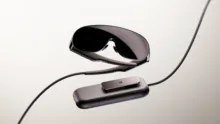
Meta announced a new camera-free AI glasses model, Ray-Ban Meta Audio, on September 23 local time. Pricing starts at 349 USD (about 55,000 yen), with shipping beginning October 13. Unlike Meta's camera-equipped models, which have drawn privacy concerns, the new glasses focus entirely on audio and AI assistant features in a lighter design.
Dropping the camera for peace of mind
Meta's previous AI glasses have built in cameras that let wearers capture photos and video hands-free. That design has also raised concerns about people being recorded without their knowledge, discouraging privacy-conscious users from adopting the devices. Ray-Ban Meta Audio responds to that feedback by leaving the camera out entirely. Meta says the move is meant to create a new category within AI glasses centered on audio experiences rather than imaging.
43 grams, up to 12 hours of playback per charge
At 43 grams, Ray-Ban Meta Audio is Meta's lightest and slimmest glasses to date. The built-in battery supports up to 12 hours of music playback or calls on its own, and the included case adds up to 48 more hours of charge. Directional speakers deliver audio without covering the ears while keeping sound leakage to a minimum. Beyond music and podcasts, the glasses support hands-free calling and voice activation of Meta's AI assistant.
Two classic styles, 23 combinations
The lineup comes in two styles, Clubmaster and Burbank, available across 23 frame and lens combinations. The temple tips can be adjusted to fit different head shapes, and the nose pads are swappable. Prescription lenses are also supported, so everyday glasses wearers can use them the same way. Manufacturing continues to be handled by EssilorLuxottica, which also produces Ray-Ban and Oakley eyewear.
How it fits alongside the camera-equipped flagship
At the same event, Meta also introduced its camera-equipped flagship, Ray-Ban Meta (Gen 3), priced from 449 USD (about 70,000 yen) and featuring a 12-megapixel camera capable of 3K-equivalent video. Ray-Ban Meta Audio skips the camera in exchange for a lighter build and longer battery life, positioning it as the audio-focused counterpart to Gen 3. By offering both lines, Meta appears to be targeting people who want to capture photos and video as well as those who mainly want music and calls.
Muse, a personal AI agent, is coming later
Meta also revealed plans to bring a personal AI agent called Muse to Ray-Ban Meta Audio and its other AI glasses. Muse is designed to help manage schedules and break down long-term goals into actionable tasks, all through voice commands without reaching for a phone. Meta has not yet detailed a timeline for the rollout.
Summary
Ray-Ban Meta Audio is a new AI glasses model that addresses privacy concerns by removing the camera while improving weight and battery life. Pricing starts at 349 USD (about 55,000 yen), with shipments beginning October 13. Preorders are open in the US, while a Japan release date has not yet been announced. Alongside its camera-equipped flagship, Meta appears to be broadening its AI glasses lineup to cover different use cases.
*Exchange rate: 1 USD = 157 JPY (as of September 26, 2026)