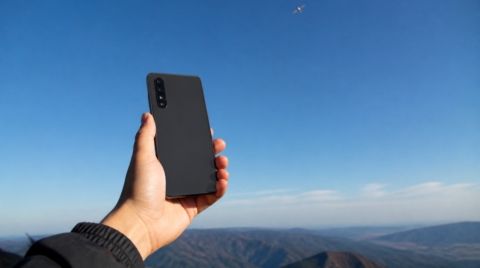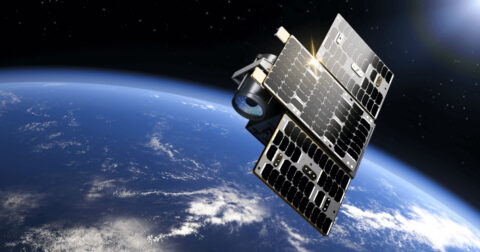

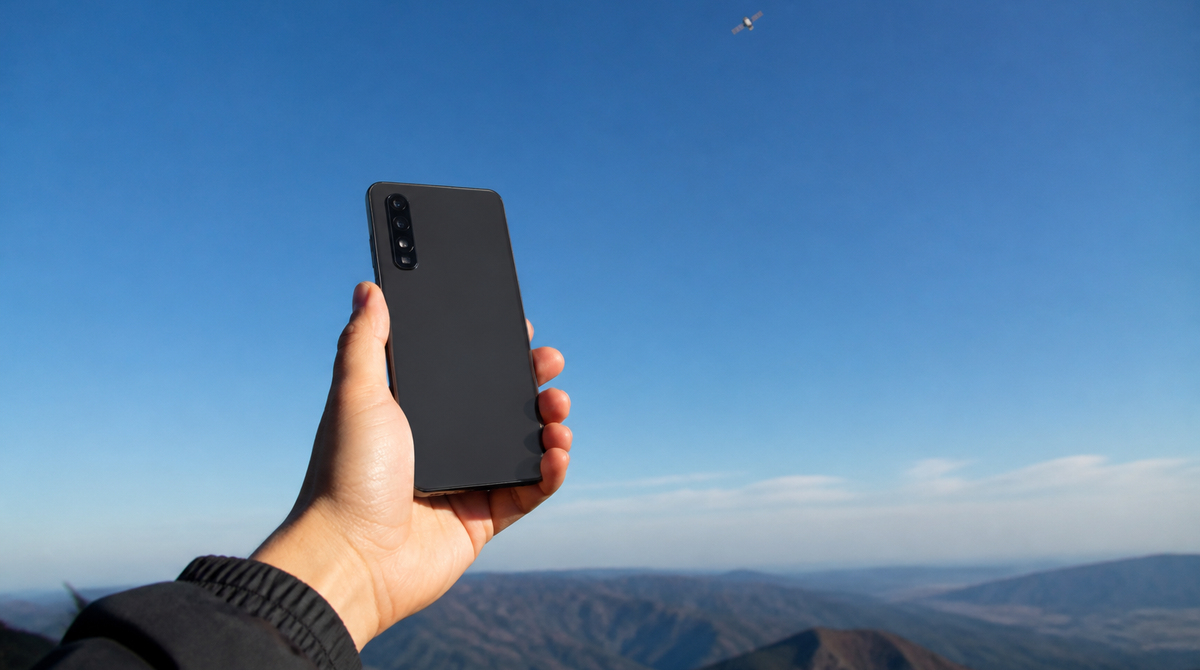
On September 15, 2026, KDDI announced that it has signed a service agreement with SpaceX for the next-generation "Starlink Mobile V2" satellites, a move that takes its direct satellite-to-smartphone service "au Starlink Direct" to the next stage. The contract itself is dated August 10, and according to KDDI it is the first of its kind for a carrier in Asia. Today the service is limited to messaging and data for select apps outside cellular coverage; KDDI aims to extend it to broadband-class data and voice calls (VoLTE) by the end of 2027.
About 20x the throughput per satellite and 100x the data density
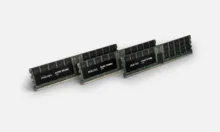
Starlink Mobile V2 is the second generation of satellites built for direct communication with smartphones. Compared with the first generation, the antenna is considerably larger, raising throughput per satellite by roughly 20 times. A greater number of communication beams also lifts data density, the amount of data that can be delivered to a given area, by roughly 100 times.
The reason the current au Starlink Direct is confined to text-centric use is that a single satellite can only exchange so much data with handsets on the ground. With capacity increasing by orders of magnitude, users in mountainous areas, on remote islands, or at sea, where no ground base station reaches, get much closer to everyday usage such as web browsing, video playback, and phone calls. KDDI intends to use these satellites to push its "connected anywhere you can see the sky" experience a step further.
au Starlink Direct has broadened its uses over the past year and a half
au Starlink Direct launched in April 2025 as a direct satellite-to-smartphone service covering all of Japan. In 2026 it added international roaming in March, followed in April by a dedicated center to receive SOS calls from outside coverage and support for direct connections with IoT devices. In July, KDDI also succeeded in a flight test controlling a drone via satellite outside cellular coverage, so the service is increasingly used not only for personal safety but also for disaster preparedness and wildlife damage control in local communities.
In other words, this contract adds raw capacity to a service that has so far expanded horizontally in terms of use cases. The out-of-coverage experience shifts from "you can at least send a message" to "you can talk and browse."
A relationship with SpaceX since 2021, now expanding into AI
KDDI's collaboration with SpaceX dates back to a business partnership in 2021. Starlink has since been adopted for backhaul links (the connections between base stations and the core network) at au base stations, KDDI became the first in Japan to offer "Starlink Business" for enterprises and municipalities, and it provided Starlink terminals free of charge to evacuation shelters to restore communications after the Noto Peninsula earthquake. The Starlink Mobile V2 deal sits on top of that track record.
The announcement includes comments from both companies' leaders. SpaceX President and COO Gwynne Shotwell welcomed the chance to deliver a more resilient and seamless connectivity experience to customers in Japan together with KDDI, describing the deal as the start of a new chapter in the partnership. KDDI President and CEO Hiromichi Matsuda referred to his visit to Starbase in Texas and his discussions with Shotwell, saying that Starlink Mobile V2, along with xAI and the concept of space-based data centers, resonates with KDDI's vision of next-generation infrastructure for an AI-first society. The two companies plan to extend their partnership beyond satellite communications into the AI field.
Docomo in fiscal 2028, KDDI by end of 2027
NTT Docomo has also announced that it agreed with Starlink Japan in August 2026 on a contract for Starlink Mobile V2, with its next-generation service slated to start during fiscal 2028. Both carriers plan voice calls, high-speed data such as browsing, and direct connections with IoT devices.
KDDI's target of end of 2027 is about a year earlier. Naturally, the actual launch will depend on satellite deployments, handset support, and spectrum coordination, and KDDI has not yet disclosed pricing, supported devices, or expected speeds. Still, with two Japanese carriers now naming specific years for voice and high-speed data outside coverage, direct satellite communication is on a visible path from an emergency backup to everyday infrastructure. For my part, I look forward to the day when tethering on a mountain trail or a remote island is nothing special, and will be watching for updates in 2027.
Summary
KDDI signed a service agreement with SpaceX for the next-generation Starlink Mobile V2 satellites on August 10, 2026, and announced it on September 15. The deal is the first in Asia, and the satellites offer about 20 times the throughput per unit and about 100 times the data density of the first generation. KDDI aims to provide high-speed data and voice calls outside cellular coverage by the end of 2027. Its collaboration with SpaceX, ongoing since 2021, is set to expand into AI, and the timing gap with NTT Docomo, which plans a fiscal 2028 launch, is likely to draw attention.