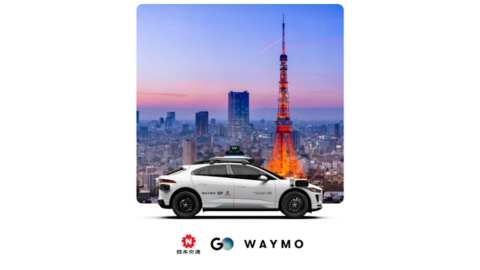
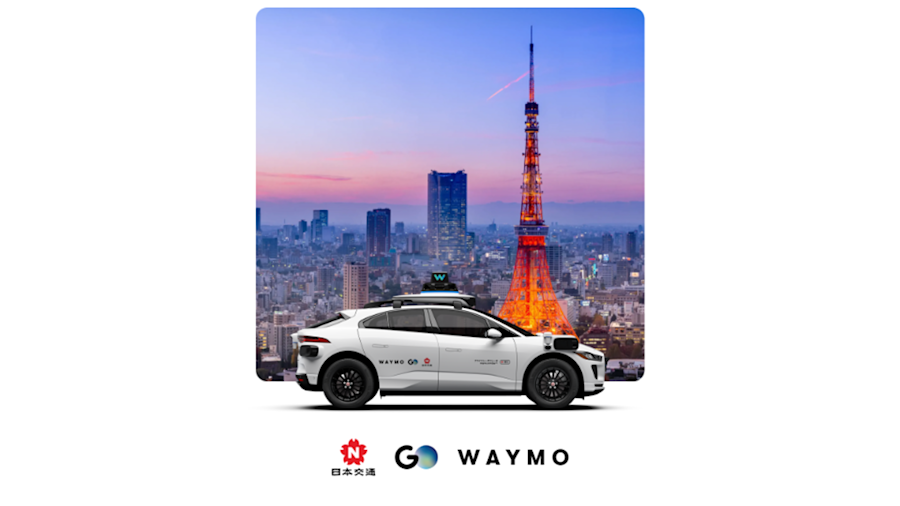
GO Inc., which operates Japan's leading taxi-hailing app, Alphabet's self-driving unit Waymo, and Nihon Kotsu, Tokyo's largest taxi operator, have agreed on a strategic partnership to commercialize autonomous taxis in Tokyo. The goal is commercial service with fully driverless SAE Level 4 operation at some point in 2027. If it happens, it will be the first of its kind in Japan.
Carrying passengers with nobody in the driver's seat
The key word in this agreement is Level 4. Under the SAE definition, Level 4 means the system handles every driving task within a limited operational domain, with no human intervention in the driving itself. In practice, that means picking up paying passengers with nobody sitting in the driver's seat.
The fleet will not appear all at once. The plan is to scale up gradually to around 100 vehicles during 2027. There will be two ways to hail one. Riders can request an autonomous taxi through GO, the taxi app that ranks first in Japan by downloads, and through Waymo's own app. In other words, driverless cars will show up as an option inside apps people already use.
Three companies, three clearly separate jobs
What stands out here is how little the three roles overlap.
GO takes the coordinating position with regional taxi operators. It handles the overall design work needed to fit Waymo's autonomous technology into Japan's taxi industry, and delivers the service through its app. Waymo supplies the operational platform, the fleet management systems, and the experience it has accumulated. Nihon Kotsu takes on the heaviest, least glamorous part: day-to-day operations management and running the depots.
An operator that has been putting taxis on Tokyo streets for roughly 100 years runs the depots, the technology comes from the United States, and a Japanese app company draws the blueprint connecting the two. That is a very different structure from a foreign autonomous driving company entering the Japanese market on its own.
Waymo co-CEO Tekedra Mawakana commented that Waymo currently provides more than 500,000 rides per week and has been shown to be more than 15 times safer than human drivers. The question now is how that record transfers to Tokyo road conditions.
Built on testing across seven wards since 2025
This announcement did not come out of nowhere. Since 2025, the three companies have run public-road testing across seven wards of Tokyo, tuning Waymo's autonomous technology to the local road environment. Testing currently continues with a Nihon Kotsu driver on board.
Tokyo roads differ considerably from American cities: narrow side streets, heavy bicycle traffic, and volumes that shift by the hour. More than a year of data collection in that environment is what made the step toward fully driverless service possible.
The official start date has not been set
It is worth being precise about one thing: 2027 is a target, not a confirmed launch date. The three companies say the formal start of service will be decided only after safety has been established and the approvals required under Japan's Road Traffic Act, Road Transportation Act and related regulations have been obtained. They intend to work closely with the relevant ministries and local governments on that process.
Japan has limited operational precedent for putting driverless vehicles into commercial service. Even if the technology is ready, passengers cannot board until the regulatory side signs off. The 2027 figure should be read as an outlook that includes that process.
An answer to a labor shortage
The three companies frame this partnership not only as a mobility solution but as a response to structural social problems in Japan, including population decline and labor shortages. Nihon Kotsu President Taiji Wakabayashi described it as an effort that complements a future shortage of drivers while coexisting with human-driven taxis.
Driverless taxis are often discussed in terms of taking jobs away from drivers. Japan's taxi industry faces the opposite situation: there are not enough drivers, and vehicles sit idle as a result. Adding driverless cars makes sense in that domestic context.
Summary
GO, Waymo and Nihon Kotsu have agreed to aim for Japan's first Level 4 fully driverless commercial taxi service in Tokyo during 2027. The fleet will expand gradually to around 100 vehicles, hailable from both the GO and Waymo apps. Public-road testing across seven Tokyo wards since 2025 forms the foundation, and the official start date depends on regulatory approval. The next two years will test the regulatory and social response more than the technology itself.