
Microsoft is working toward more than 38 gigawatts of global data center capacity by 2032. The company sits at roughly 12 gigawatts today, so the plan means more than tripling its footprint in a little over six years. What is driving it is not ambition so much as arithmetic: Microsoft has been losing business because it cannot supply enough compute, and the buildout is closer to catch-up construction than to a bet on future demand.
Triple Overall, More Than Sixfold for AI
The distribution of those gigawatts says more than the headline number. Total capacity roughly triples from 12 to 38, but the share allocated to AI workloads climbs from about 2 gigawatts today to somewhere near 13 by 2032. That puts roughly one third of the total behind AI silicon, and in growth terms it is more than a sixfold increase.
Data center scale gets measured in gigawatts because electricity, not floor space, sets the ceiling. What matters is how much power a site can pull in and how much heat it can reject, so in AI infrastructure a capacity discussion is always a power discussion. For scale, 38 gigawatts is in the range of several dozen large nuclear reactors.
One caveat on the number: it covers only facilities Microsoft owns or leases directly. Compute rented from neocloud providers such as CoreWeave sits outside the plan, so the capacity actually available to Microsoft will run higher than the figure suggests.
The Build Rate Is Already at a Record
Recent quarters show the plan is not a slide deck. In the quarter that closed at the end of June 2026, Microsoft added a full gigawatt of capacity and brought 31 data centers online across 5 continents. Capital expenditure for that quarter came to 41 billion USD (about 6.3 trillion yen), with roughly two thirds of it going to CPUs and GPUs.
Note: 1 USD = 153 JPY (as of September 13, 2026)
For calendar 2026, capital expenditure is expected to reach about 175 billion USD (about 27 trillion yen) once an accounting adjustment for data center leases is included. Azure annual revenue has passed 100 billion USD (about 15 trillion yen), growing 41 percent year on year. Revenue is outrunning capacity, and that gap is where this plan starts.
Customers Lost to a Shortage of Racks
Excess demand has shown up as lost deals rather than as a talking point. Temu moved a major cloud contract to Oracle after Microsoft could not deliver enough capacity in the regions it wanted. Microsoft's own services have felt it too: GitHub suffered an eight-hour outage in August that was tied to server constraints, and Xbox cloud gaming has seen usage restrictions.
CFO Amy Hood has said customer demand continued to exceed available capacity. Every quarter brings a real decision about whether scarce GPUs go to external customers or to Microsoft's own products. For a cloud provider, having buyers but nothing to sell is a worse position than losing on price.
Build Speed Is Set by Grid Speed
The hard constraint from here is not money. The 2-gigawatt campus planned for Pecos, Texas is expected to take 5 to 7 years to come up. The buildings themselves go up in a year or two; grid interconnection, transformer procurement and local approvals are what set the total schedule.
Read that way, the 2032 date is not aggressive, it is simply how long this takes. A six-year horizon is also very long for an AI demand forecast, and if technology or customer behavior shifts along the way, some of that capacity could end up surplus. For now the shortage is the certain problem, so the risk of overbuilding is the one being deferred.
Summary
Microsoft plans to expand data center capacity beyond 38 gigawatts by 2032, with roughly 13 gigawatts of that dedicated to AI. It added a gigawatt and 31 sites in a single recent quarter and expects calendar 2026 capital expenditure of about 175 billion USD, yet demand still outstrips supply, as the lost Temu contract and the GitHub outage made visible. From here the story is less about spending and more about how quickly grid connections and local approvals can be secured.
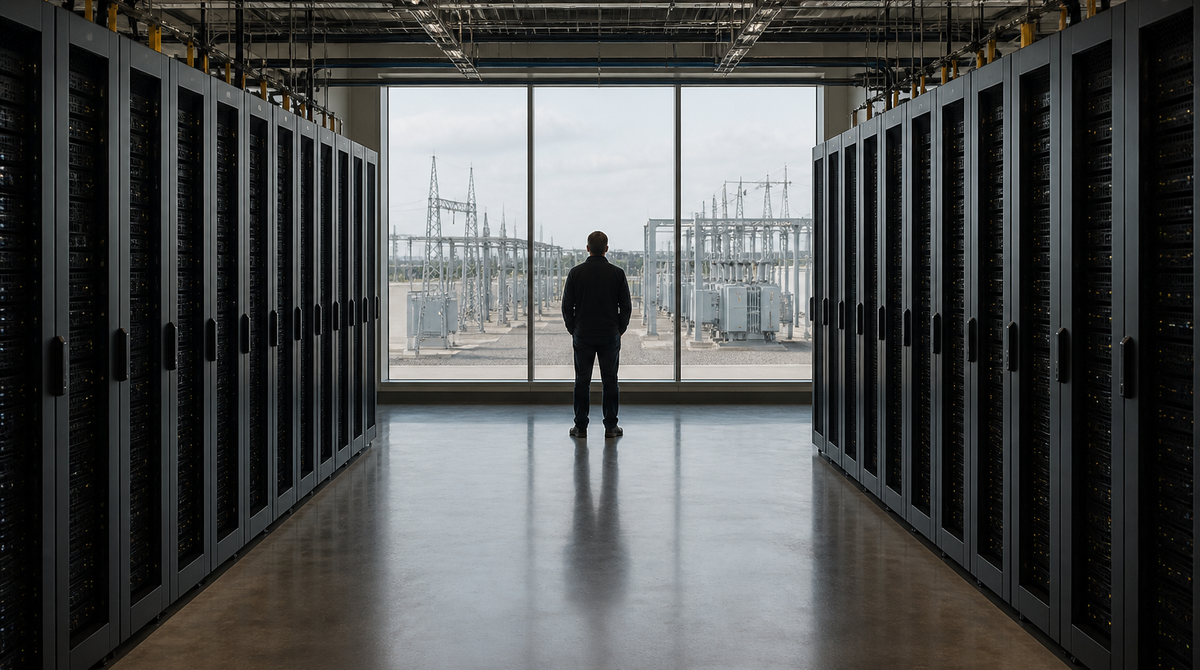
Note: the thumbnail image is AI-generated and illustrative.