
On September 9, Google announced it will invest 13 billion euros (about 2.3 trillion yen) in Finnish digital infrastructure across 2027 and 2028. It is the largest single investment the company has made in Europe. What stands out is not the server capacity alone, but the fact that Google simultaneously secured a 22-year contract underpinning the life extension of a nuclear power plant.
From Hamina, Fifteen Years On, Into the Interior
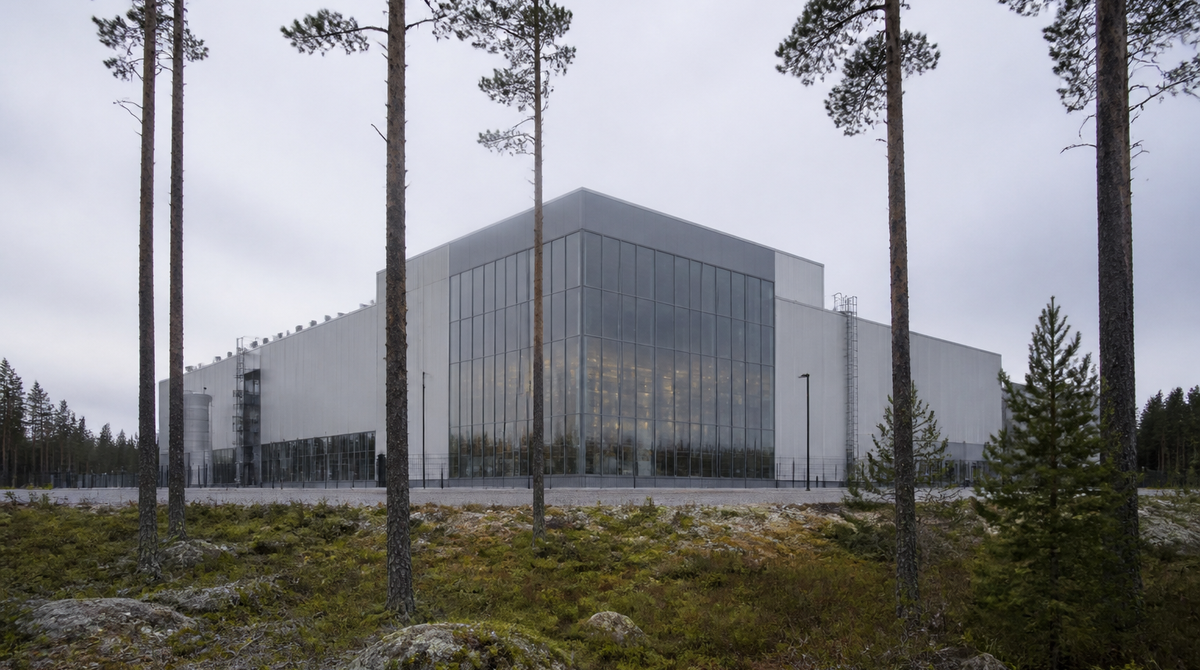
Google's presence in Finland began fifteen years ago, when it converted a former paper mill in the southern town of Hamina into a data center. The site has doubled as a testbed for environmental engineering, using seawater cooling and routing waste heat to nearby homes and businesses. Between 2023 and 2025 alone, more than 600 Finnish suppliers gathered around the facility across construction, operations, and fiber networks.
This investment expands Hamina further and adds three new sites in Kajaani, Muhos, and Vaala, all further inland. Google frames the build-out as a response to rising demand for core services such as Search, Maps, and Gemini. Finland's cool climate and abundant low-carbon generation have long made it an attractive location for data centers.
※1 EUR = 179 JPY (as of September 10, 2026)
Buying Twenty-Two Years of Electricity Up Front
The energy side of the announcement centers on a contract with the Finnish utility Fortum. Google signed a 22-year power purchase agreement supporting the life extension of the Loviisa nuclear power plant. According to Fortum, deliveries begin at a smaller volume in 2028 and scale to as much as 50 percent of the plant's output from 2030 through 2049.
Loviisa runs two reactors and has supplied roughly 10 percent of Finland's electricity. Extending its operating life to 2050 requires refurbishment on the order of 1 billion euros (about 180 billion yen), and a long-term buyer makes that investment decision far easier for Fortum. The utility's problem of how to keep an aging plant running and the tech company's need for stable bulk power lined up neatly here.
The contract is not limited to nuclear. Google also says it is adding new onshore wind capacity and contracting for a 94-megawatt battery system. The stated role of the batteries is to hold down price spikes during cold, windless periods, which points to grid stability rather than purely captive supply.
37,000 Jobs and 31 Million Euros for Local Communities
Google puts the economic effect at more than 37,000 jobs supported nationwide during the 2027 and 2028 construction phase, contributing 3.6 billion euros (about 640 billion yen) annually to Finnish GDP. Once the sites are running, the company expects thousands of permanent roles spanning engineering, security, and catering.
There is a direct local allocation as well. Google will put 31 million euros (about 5.5 billion yen) into education and economic development in Hamina, Kajaani, Muhos, and Vaala over the next four years. That includes AI upskilling programs delivered with local colleges for more than 4,400 workers, plus training pathways for 100 Finnish students aiming at data center careers. Regenerating native forests and wetlands near the sites, along with building trails, public saunas, and fishing piers, also appears on the list, reflecting attention to the burden these facilities place on host regions.
The Contest Has Shifted to Electricity
What comes through in the announcement is that the competitive axis in AI infrastructure has widened from chips to power. Stacking up compute means nothing without electricity to run it around the clock. And a contract running to 2049 shows that existing reactors are taking on new value.
At the same time, it remains an open question how one company locking in decades of supply will affect regional electricity prices and grid usage. Google says it is mindful of keeping energy affordable, but the real effects will only become visible after 2030, when offtake volumes rise in earnest. The structure itself, in which a single company's investment decision reaches this deep into one country's power supply, is different in kind from data center investments that came before.
Summary
Google's 13 billion euros for Finland covers more than buildings: alongside the Hamina expansion and three new inland sites, it bundles a 22-year contract supporting the Loviisa plant's life extension, new onshore wind, and a 94-megawatt battery system. The company also put numbers on the table, including over 37,000 jobs during construction, 3.6 billion euros in annual GDP contribution, and 31 million euros allocated across four municipalities. It is about as clear a demonstration as you will find that the question after chips is electricity.