
Gimlet Labs, a San Francisco-based AI inference infrastructure company, has closed a 300 million USD (about 47 billion yen) Series B led by Andreessen Horowitz, valuing the company at 3 billion USD (about 470 billion yen). What the company sells is not a larger pile of GPUs, but a way to treat GPUs, CPUs and purpose-built accelerators as one system and route each stage of an inference workload to the silicon best suited to it.
※1 USD = 156 JPY (as of September 7, 2026)
Splitting inference into stages and sending each one to the right chip
A conventional inference platform lines up large numbers of a single accelerator type and pushes work through them. Gimlet takes a different route: it breaks a model's inference work into separate phases and assigns each phase to the hardware best suited for it. The company calls the result a multi-silicon inference cloud.
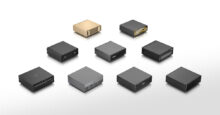
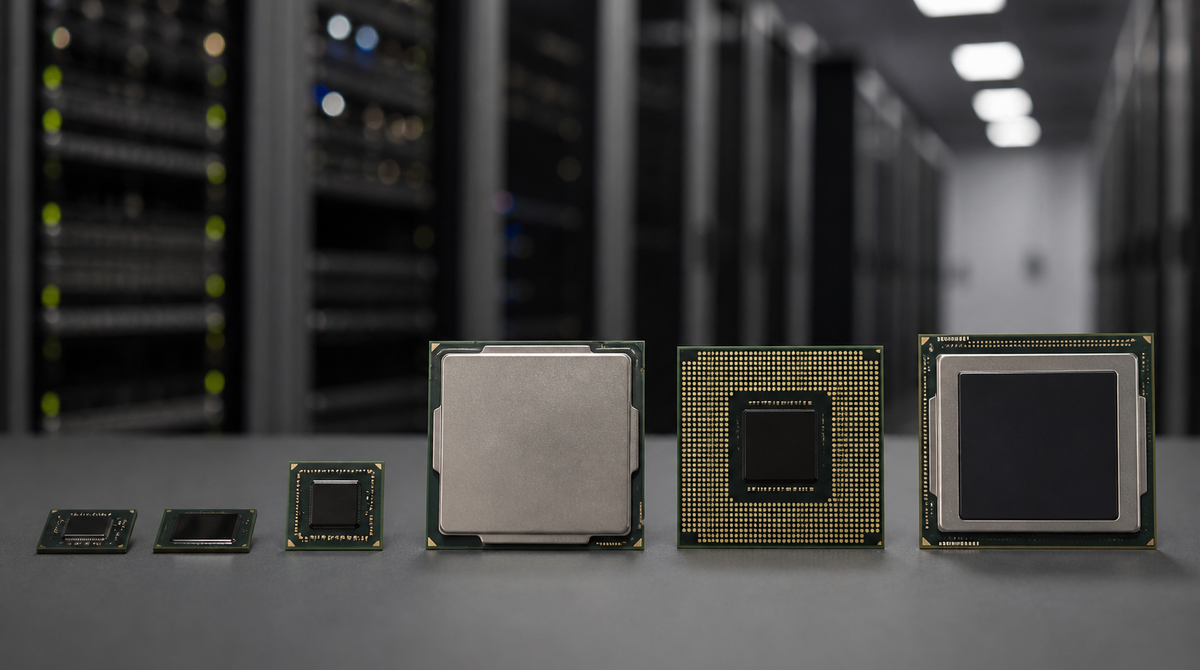
Supported silicon spans NVIDIA, AMD, Intel, Arm, Cerebras and d-Matrix, and the architecture can combine GPUs, CPUs and purpose-built accelerators, including SRAM-based designs, inside a single system. Gimlet owns all three layers involved: the data center architecture, the inference software, and the orchestration that distributes work across compute nodes.
According to the company, matching workload stages to optimized hardware architectures delivers up to 10 times the throughput and interactivity. It also raises utilization of scarce compute and electricity, which reduces the infrastructure footprint and cost needed to serve a given volume of inference. Agentic AI turns a single instruction into a long chain of inference calls and still demands low latency, and Gimlet positions its design around exactly that load profile.
Customers can use the company's own managed cloud or have Gimlet deploy a managed configuration inside their own environment.
Total funding reaches 392 million USD, with Arm joining the cap table
Sapphire Ventures participated as a major investor in the round, while M12 and Arm came in as new investors. Existing backers Menlo Ventures and Factory also took part. The presence of Arm, a chip design company, suggests the multi-silicon thesis has support from the hardware side as well.
Total funding now stands at 392 million USD (about 61 billion yen). Gimlet emerged from stealth in October 2025 with a 12 million USD (about 1.9 billion yen) seed round led by Factory, and followed it in March 2026 with an 80 million USD (about 12.5 billion yen) Series A led by Menlo Ventures. Reaching a 3 billion USD valuation took less than a year from that point.
Commercial progress has moved at a similar pace. As of March 2026, the company said its customer base had tripled and that it had added one of the top three frontier AI labs and one of the top three hyperscalers as customers. Since then it has secured billions of dollars in contracted revenue for Gimlet Cloud and has been scaling its managed heterogeneous infrastructure toward hundreds of megawatts. The new capital goes toward expanding that multi-silicon cloud and hiring.
Where the company came from, and the market its investors see
Gimlet Labs was founded in 2023 as a spin-out of a Stanford University research project. Co-founder and CEO Zain Asgar was a GPU architect at NVIDIA, then an engineering lead in Google's AI organization, and later co-founded and ran Pixie Labs through its acquisition by New Relic. He is also an adjunct professor of computer science at Stanford University. In short, the company is run by someone who has worked both the hardware and the systems software side of the problem.
Asgar said the industry has reached a turning point where inference is the dominant AI workload and demand for tokens is growing explosively. Raghu Raghuram, managing partner at Andreessen Horowitz and a Gimlet Labs board member, argued that the answer is not simply more infrastructure but a better architecture, and that making GPUs and purpose-built accelerators operate as one system yields substantially more throughput and interactivity per watt.
For market context, Gimlet cites Goldman Sachs estimates that the industry could spend roughly 765 billion USD (about 119 trillion yen) on AI capital expenditure in 2026, and 7.6 trillion USD (about 1,190 trillion yen) cumulatively between 2026 and 2031. As spending shifts from training toward inference, the choice is whether to keep adding more of the same GPUs or to mix different classes of silicon for efficiency. Gimlet is betting on the second.
Summary
Gimlet Labs raised 300 million USD in its Series B, reaching a 3 billion USD valuation and 392 million USD in total funding. By decomposing inference into stages and routing them across silicon from NVIDIA to d-Matrix, the company claims up to 10 times better throughput and interactivity. Arm joining alongside M12 as a new investor is a further signal of support for that approach. If power and compute constraints keep failing to keep up with investment, the idea of mixing silicon rather than standardizing on it is likely to spread further.