
Anthropic has reportedly agreed to a roughly 35 billion USD (about 5.6 trillion yen) compute deal with Lambda, a cloud provider backed by Nvidia. The capacity comes from a data center under development by Hut 8 in Nueces County, Texas, sized at about 350 megawatts. What stands out is not the headline number but the fact that Nvidia itself is said to hold the lease on the building.
※1 USD = 160 JPY (as of September 2, 2026)
Nvidia is no longer just the chip vendor
The unusual part of this structure is that the tenant on the facility is reportedly neither Lambda nor Anthropic, but Nvidia. Nvidia supplies the chips to Lambda, holds equity in Lambda, and takes on the lease for the site. That is three roles inside a single transaction.
In AI data center development, the hardest gate is often finding a tenant creditworthy enough to justify a multibillion-dollar build to lenders. With Nvidia in that seat, Lambda can skip the job of securing the facility on its own and concentrate on delivering capacity to Anthropic. For Nvidia, it is one more route to keep its chips at the center of new AI infrastructure.
The flip side is that Nvidia is moving infrastructure risk onto its own books. If AI demand stays strong, both construction and chip shipments accelerate. If demand softens, what remains is a lease obligation on an underused site. Terms with Hut 8 and Lambda have not been disclosed, so the size of that exposure is not visible from the outside.
The unnamed tenant Hut 8 disclosed in July
Back in July, Hut 8 disclosed that a highly rated investment-grade tenant had signed two 15-year leases covering 704 megawatts at its Texas campus, with a combined base-term contract value of 19.6 billion USD (about 3.1 trillion yen). The tenant was not named.
If the current reporting is accurate, that disclosure and this 350-megawatt block describe the same campus. For Hut 8, which has been shifting from cryptocurrency mining toward AI data centers, this is the kind of contract that decides whether the pivot works.
Hut 8 is also building other Texas facilities for Anthropic, and those are said to run Google's TPUs (tensor processing units). Anthropic is clearly spreading its bets across more than one hardware ecosystem.
Trillions of yen committed in a single week
This is not a one-off for Anthropic. Reports also point to 45 billion USD (about 7.2 trillion yen) with Nscale at a West Virginia data center, 50 billion USD (about 8 trillion yen) with Fluidstack, and another 45 billion USD (about 7.2 trillion yen) with SpaceX. Together with the Lambda agreement, the totals disclosed in a short window run well past 20 trillion yen.
The reason for the hurry is simple. A strong model on its own does not make a business. Serving Claude to large numbers of users requires chips, data centers and electricity every single time. The performance race continues, but the decisive battleground is shifting toward securing compute.
That shift favors specialist cloud operators like Lambda, which can chase contracts far beyond their own balance sheet by riding Nvidia's capital and hardware ecosystem.
The competition is not only about chips
What this deal makes clear is that AI companies are no longer just fighting over the newest processors. What they need is a data center that can be powered up now, and that requires land, grid capacity, buildings, financing and decade-long commitments all at once. Increasingly, power and sites become the constraint before semiconductor supply does.
Anthropic is also working to reduce its hardware dependence. The company has confirmed that it built an in-house chip team, looking for more control over the foundation that supports Claude's growth. Buying enormous external capacity and designing silicon internally are not contradictory moves. Both are hedges against growth stalling on someone else's schedule.
Nothing changes for users right now
From a Claude user's perspective, this agreement brings no immediate change to pricing or product availability. The effect arrives later: more headroom makes it easier to absorb rising demand and should improve reliability during busy periods. Depending less on any single cloud or chip vendor also helps users over the long run.
It is worth repeating that all of this comes from people familiar with the matter, as reported by the press. Neither Anthropic, Lambda nor Nvidia has issued a formal announcement, and the figures and scale could shift once official disclosures arrive.
Summary
The reported 35 billion USD block of compute secured through Lambda is striking less for its size than for the shape of the deal, with Nvidia sitting at the center as the leaseholder. It is a clean illustration of how the AI industry's bottleneck is moving from chip procurement toward power and real estate. Nothing is official yet, but as a template for the next round of AI infrastructure spending, it is worth watching.
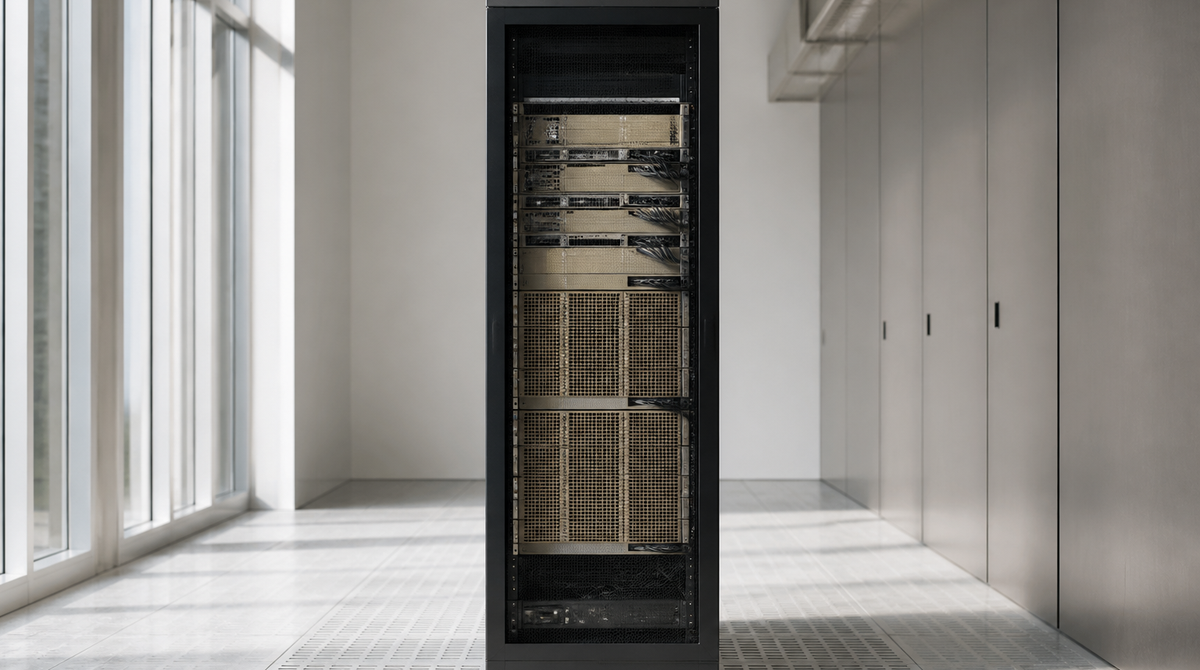
※The thumbnail image is AI-generated.