
On August 21, Anthropic made Claude Mythos 5, the model it describes as having the strongest cybersecurity capabilities available, usable through its code scanning service Claude Security. Access is limited to organizations on Claude Enterprise plans, and the feature is currently in public beta. Rather than letting users converse with the model, the product returns only vulnerability findings and suggested fixes, which is the whole point of the release.
Withholding the prompt box on purpose
Mythos has never been part of Anthropic's generally available lineup. In April the company launched Project Glasswing and handed Mythos Preview, and later Mythos 5, to a small set of organizations defending critical software. The idea was to give defenders a head start before attackers could reach comparable capability.
The flip side is that this is a difficult model to hand out. The skill that finds a vulnerability is the same skill that writes an exploit. Claude Fable 5, which ships the same underlying model broadly, routes cyber, biology, and chemistry requests away through classifiers so they never reach Mythos-class handling.
What Anthropic proposed this time is not a reduction in capability but a redesign of the interface. Risk concentrates when a user can prompt the model directly. If all a user can receive is a fixed artifact such as a patch or an alert, that risk drops considerably. Following that logic, the company widened access to the outputs while keeping the guardrails around direct access to the model itself.
Pick a GitHub repository and the scan runs
The workflow is simple. An Enterprise admin enables Claude Security from the admin console, and users can then select a repository to scan. Mythos 5 works through the codebase and returns findings one at a time.
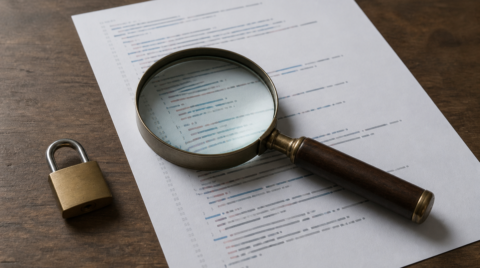
Each finding carries a CWE (Common Weakness Enumeration) category, severity and confidence ratings, and a suggested fix. Instead of matching patterns against rules, the scan traces how data moves across files. Anthropic points to high-severity classes of work as the target: memory corruption, injection flaws, authentication bypasses, and logic errors that span multiple files.
No extra fee, and humans decide what gets applied
Scans are billed as standard token usage under an existing plan, with no separate model add-on. An Enterprise agreement is enough to reach the top tier of scanning capability.
Fixing the findings happens elsewhere. Users open Claude Code on the web to implement a patch, and that step runs on whatever models the organization already has. Passing a scan through Mythos 5 does not extend Mythos access to any other surface. Every patch must be reviewed and approved by a person before it can be applied. The line against handing the whole job to an AI is drawn clearly.
35 million dollars for open-source defense
The same announcement introduced the Defender Advantage Fund (0xDAF), which will provide 35 million USD (about 5.6 billion yen) in Claude credits to organizations that help secure open-source software.
※1 USD = 159 JPY
Grants will focus on three areas: patching live vulnerabilities in widely used projects, automating scanning and patching in ways other projects can copy, and pursuing more ambitious designs that neutralize entire classes of attack. Anthropic plans to start with a small number of larger pilot grants and name the initial recipients within the coming weeks.
Through Project Glasswing, Anthropic had already donated 4 million USD (about 640 million yen) to open-source security organizations and supported coordinated vulnerability-fixing efforts. The new fund extends that work. Much of the software the world runs on is maintained by volunteers and nonprofit foundations, and this is an attempt to address that with both money and compute.
Partner products and a wider verification program
Two more moves were signaled. The first is embedding Mythos 5 into the products and services of cybersecurity partners. Teams defending hospitals, utilities, financial systems, and the software supply chain already run an established toolset, so reaching them through those tools is the faster path. Here too, users interact with the product interface, and no route to prompt the model directly is provided.
The second is an expansion of the Cyber Verification Program, which reduces safeguards on Opus and Sonnet models for vetted defenders. Over the coming weeks Anthropic will broaden the range of capabilities covered, with Mythos-class access to follow. Project Glasswing, run with US government partners, will also keep expanding toward critical infrastructure operators that meet strict security control requirements.
Summary
This announcement is not about a new model. It is about the shape of the window through which existing top-tier capability can safely be handed over. No prompt box, only a fixed artifact in return. If that trade-off holds, the reach of frontier models will be decided not just by who receives them but by how they are delivered. For organizations on Enterprise plans, it adds one option they can try at no extra cost.