
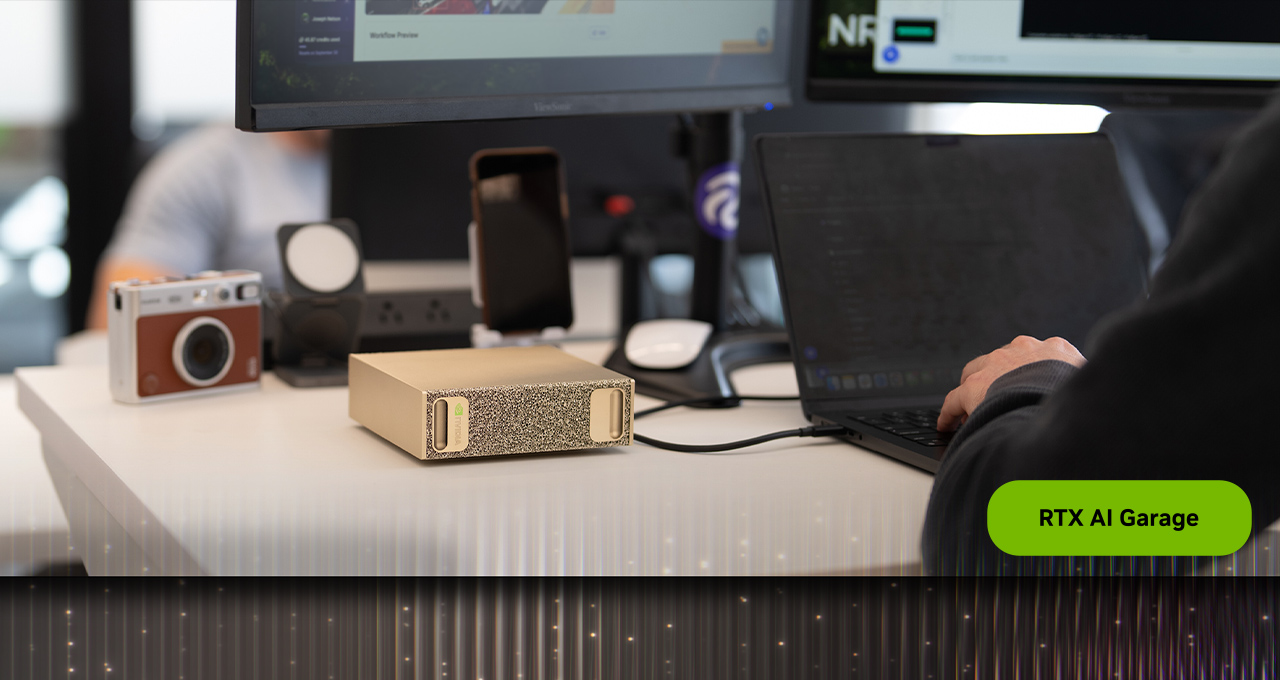
At NVIDIA GTC Taipei at COMPUTEX in Taipei, NVIDIA unveiled NVIDIA RTX Spark, a new Windows PC purpose-built for running personal AI agents[1]. It packs 1 petaflop of AI compute and 128GB of unified memory (a large pool of memory shared by the CPU and GPU), so agents can run on the device itself without sending data to the cloud[1]. NVIDIA also announced a wave of updates that strengthen locally running agents across its broad RTX and DGX product lineups[1].
A New PC Aimed at Personal Agents
According to NVIDIA, open-source personal agents such as OpenClaw and Hermes are spreading quickly on GitHub[1]. These agents adapt to a user's preferences and workflows, and can operate applications, generate content, and automate repetitive work, handling multi-step tasks entirely on the device[1].
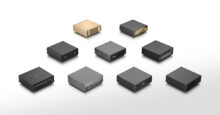
RTX Spark is built for exactly these uses. With 1 petaflop of AI compute and 128GB of unified memory, NVIDIA says it can meet the computing demands of on-device agents, positioning it as a shift from tool to teammate[1]. Designed for AI work, creation, and gaming, it will come in both slim Windows laptops with all-day battery life and power-efficient desktop PCs[1].
For professionals, NVIDIA also prepared the NVIDIA DGX Station for Windows. It is positioned as a deskside AI supercomputer that pairs a data-center-class GPU and CPU for inference (the process by which a trained AI produces answers) with Windows for manageability, security, and compatibility[1].
A Framework for Running Agents Safely on Local Devices
One reason agents have not spread widely is the difficulty of running them on a primary PC while keeping them secure and private[1]. NVIDIA is working with Microsoft to provide a robust, secure Windows platform that addresses this[1]. The foundation consists of new agent-focused security primitives from Microsoft and a runtime called NVIDIA OpenShell[1].
The new Windows mechanisms deliver identity, containment, policy management, and end-to-end security[1]. OpenShell adds the ability for users to define what agents may and may not do, to route processing to local models according to privacy policies, and to mask personal information in queries sent to cloud models[1].
This security layer is being adopted by leading agent developers such as Hermes Agent and OpenClaw and built into their new Windows apps[1]. With these apps, on-device agents can carry out tasks inside Windows applications, plan work that spans multiple apps, generate images and video, write code for plug-ins and apps, and search local files by meaning[1].
Faster Inference, Multi-GPU Support, and a Ready Linux Environment
NVIDIA is also strengthening the foundation of locally running open models[1]. Working with the llama.cpp community on its inference engine, it introduced multi-token prediction (MTP), a form of speculative decoding that reads ahead several tokens at once[1]. This delivers a 2x performance gain on the 27B Qwen 3.6 and 3.5 models and 1.6x on the 35B models, available through LM Studio and the llama.cpp web UI[1]. In multi-GPU setups, llama.cpp now supports tensor parallelism for up to 2x memory and up to 1.8x compute, and the image-generation tool ComfyUI is sped up by as much as 2x with a new method[1].
Agents' ability to operate a computer is also expanding. H Company's computer-use tools let an agent operate a PC by viewing the screen and moving the mouse and keyboard, even in apps without APIs, and are slated to support RTX and DGX PCs[1]. NVIDIA says it quantized the company's models to lighten the workload, achieving a 2x speedup on GPUs while cutting memory use by 35%[1].
For developers who need a Linux environment, NVIDIA positions NVIDIA DGX Spark as the most capable option[1]. NemoClaw, a tool for safely deploying agents, is now available on all RTX and DGX PCs running Linux and WSL (a Linux environment on Windows), with automatic sandboxing (isolated execution) and Hermes Agent support added[1]. For the vLLM inference backend, NVIDIA prepared an optimized data format for the 35B Qwen 3.6 model, showing 2.6x the performance of the previous version on DGX Spark[1].
Creative Apps Reworked for RTX Spark
Creative software is being updated in parallel. Adobe is rebuilding Photoshop and Premiere for RTX Spark, and says processing that includes generative features such as Generative Fill and Generative Extend will be up to 2x faster for editing, color correction, and more[1]. Premiere adopts a new video pipeline that taps unified memory and the TensorRT software stack, and Substance 3D Painter and Stager run natively on RTX Spark[1].
The streaming-focused NVIDIA Broadcast 2.2 promotes Studio Voice, which improves microphone audio quality, to a full release, now running on GeForce RTX 3060 and above[1]. In the 3D software Blender, its Cycles rendering engine adds NVIDIA's DLSS 4.5 for noise reduction, arriving this fall in Blender 5.3 alongside RTX Spark[1]. A new RTX Video Frame Generation also joins the lineup to smooth out the 15 to 20 frames-per-second video that AI tends to generate[1]. ASUS ProArt laptops come with the FLUX.2 Klein 4B image-generation model preinstalled, with up to a 2.5x speedup[1]. Many of these will roll out in step with the RTX Spark launch this fall[1].
Summary
The announcement marks a step toward running AI agents on a user's own PC, safely and privately, rather than leaving everything to the cloud. Alongside the dedicated RTX Spark hardware, NVIDIA laid out a security foundation, faster inference, and optimized creative software as a single package. Many of the features are expected to come together this fall, and how far local AI becomes an everyday tool will be the next thing to watch.
Source: https://blogs.nvidia.com/blog/rtx-ai-garage-computex-spark-local-agents/