
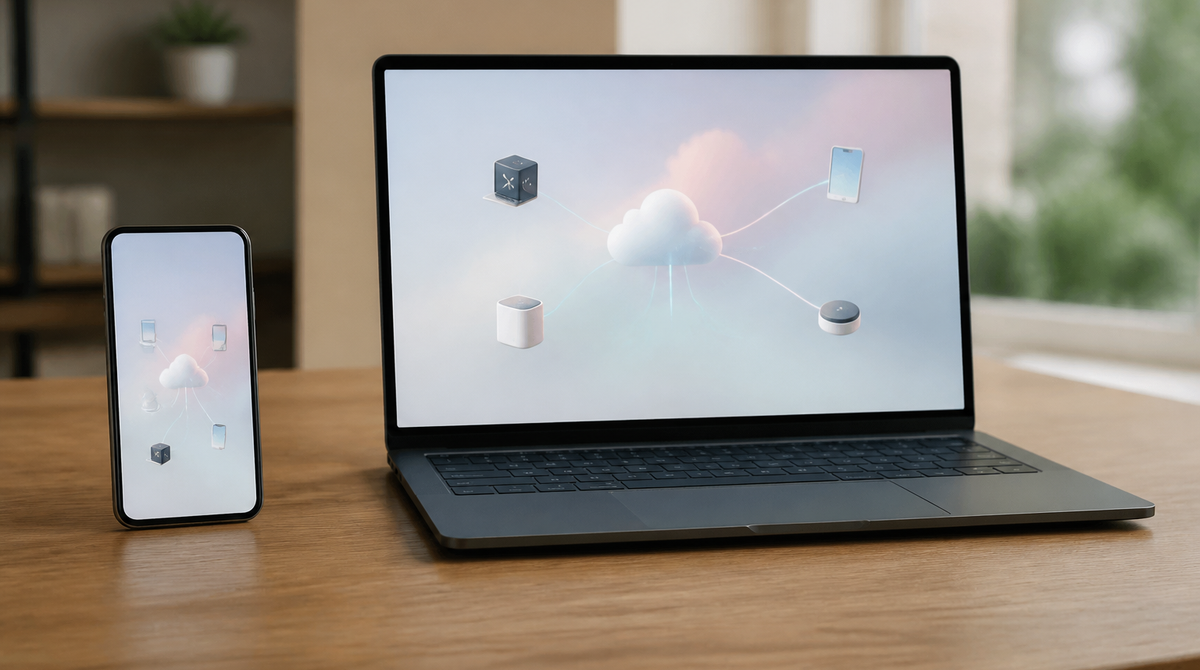
Rabbit, the US startup behind the pocket-sized R1 AI device, has introduced a new personal AI agent called OS3. The system runs in the cloud while linking to a user's own computers and phone, letting a single agent carry out tasks across several devices at once. The launch marks a clear shift in the company's focus from a single piece of hardware toward software that can run almost anywhere.
Cloud-Based, But Built to Work Through Your Own Devices
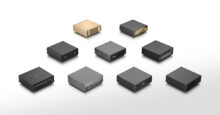
OS3 processes tasks in the cloud, but it is designed to treat a user's own machines as the actual workspace. A lightweight background program called the rabbit agent can be installed on a computer with a single command, and it runs on Windows, Mac and Linux alike. A single account can link up to five devices, including cloud virtual machines, dedicated AI machines and the original R1 handheld. Notably, the R1 is no longer required to use OS3; it is simply one of several compatible devices rather than the centerpiece of the system.
Users can interact with the agent through a web chat interface, through messaging apps such as Telegram and iMessage, or by voice, and OS3 sends a notification once a task is complete. The agent is built to control desktop software and web pages directly across linked machines, including writing and debugging code. Conversations persist as a single continuous thread rather than resetting with each new task, so users are not forced to start over every time they return.
A "Bring Your Own Key" Approach to Cost
OS3 itself carries no monthly subscription fee. Instead, it follows a "bring your own key" model: users supply their own access to whichever AI model they want to use, whether that is Anthropic's Claude, OpenAI's GPT, a model aggregator such as OpenRouter, or a locally run open-source model. Users can switch between models without losing context, memory or previously configured skills, which makes it possible to reserve a cheaper model for simple tasks and a more capable one for harder problems.
The system also supports what Rabbit calls universal skill compatibility: pasting in the URL of a skill built for a different AI agent lets OS3 set it up automatically, without extra commands or configuration. On the safety side, Rabbit says the agent will not act on its own without a user's instruction, and that sensitive actions require confirmation each time. Device-level permissions can be revoked at any point.
It's worth noting the privacy trade-off behind this convenience: files themselves stay on a user's own machine, but the prompts sent to the agent pass through Rabbit's servers on their way to whichever AI model is handling the task, and conversation history and memory data are likewise stored on Rabbit's servers.
A Strategic Pivot Away from a Single Device
Rabbit first drew attention in 2024 with the R1, a compact handheld device built around voice-driven AI interaction. The OS3 launch signals an effort to free the company's agent technology from dependence on that one piece of hardware. Founder and CEO Jesse Lyu described the effort behind the release, saying the company spent two and a half years "building toward a system you don't operate, but instead just tell it the outcome," and that OS3 lets users "stop worrying about whether a task is technically possible, and start collaborating on whatever is on their mind." Rabbit has also said it plans to release a new device called Cyberdeck, aimed at what it describes as "vibe coding," which will run on OS3 as well.
A Crowded Field for Personal AI Agents
The market for always-on personal AI agents, ones that can handle email, calendars and file management on a user's behalf, has expanded rapidly over the past several months. Services such as OpenClaw, Hermes Agent, Instinct and, most recently, Meta's Muse have all entered the space. Major AI labs are moving in a similar direction: Anthropic, for instance, offers a feature called Claude Dispatch that lets its Claude Cowork app be operated remotely from a phone, effectively giving users an always-on agent for their own computer. Against that backdrop, Rabbit is positioning OS3 around two points of differentiation: model neutrality, since it isn't tied to any single AI provider, and its ability to coordinate work across multiple devices at once.
Summary
Rabbit has followed up its R1 handheld with OS3, a cloud-based AI agent capable of operating across multiple computers at the same time. Rather than charging a monthly fee, it relies on users bringing their own AI model subscriptions, and it works on Windows, Mac and Linux as well as the existing R1. The announcement amounts to a pivot away from a hardware-first strategy, and it underscores just how competitive the market for always-on personal AI agents has become.