Security vendor Proofpoint announced the Proofpoint SOC Analyst Agent on September 3, 2026, an AI agent that lets analysts run threat investigations in plain language. It brings OpenAI Daybreak models, tuned for cyber defense, into the investigation workflow, turning scattered alerts into traceable findings and a recommended next step. Actions with real consequences, such as changing accounts or containing a threat, are deliberately left out of the agent's hands.
Alerts keep piling up, and investigation capacity does not
The bottleneck in security operations today is less about detection than about what happens after detection. As tools multiply across email, cloud, endpoint and data protection, so do alerts, and the work of deciding which ones actually matter grows with them.
In a data security study Proofpoint published in 2025, 54 percent of organizations said they already used AI-enhanced capabilities to triage and investigate alerts. That has not reduced the workload much. Analysts still have to connect signals across systems, assemble context, and decide what to look at next. The new agent is aimed squarely at that connecting and context-building work.
Ask a question, get the investigation plan with it
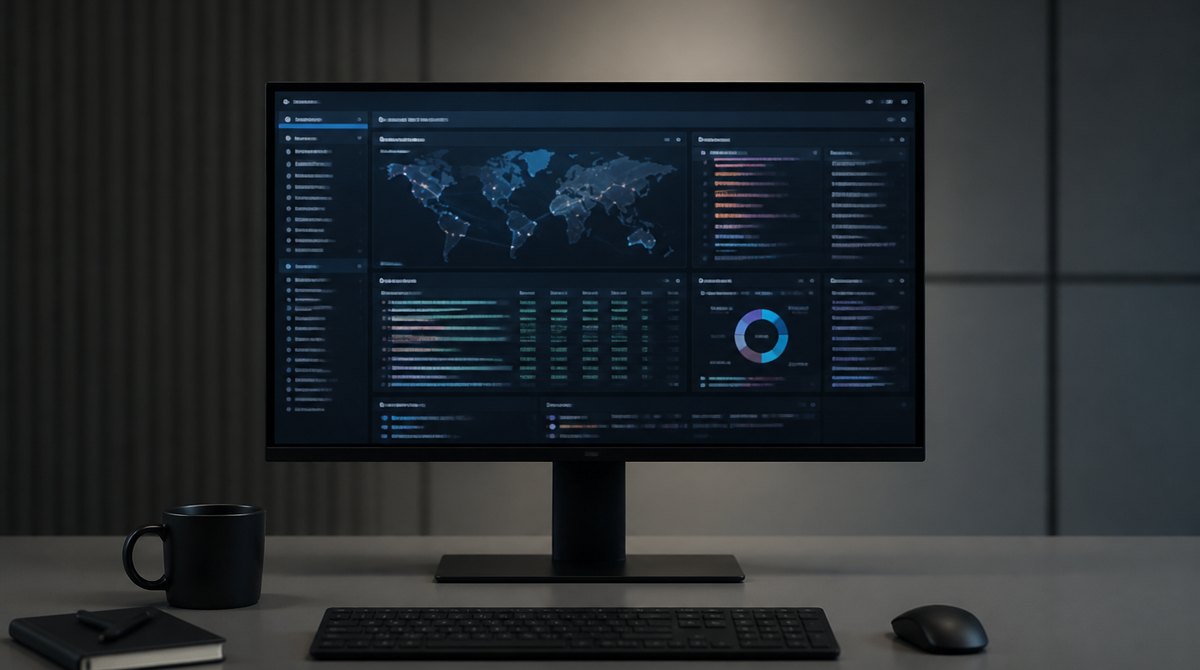
The interaction model is simple. An analyst describes the task in ordinary language, with no query syntax to learn and no consoles to hop between. The agent plans the investigation, pulls material from connected Proofpoint products, including alerts, logs, data loss prevention (DLP) events and per-user risk signals, and returns a structured finding along with a recommended action.
Three capabilities anchor the product. The first is faster investigation, letting analysts cover multiple products through a natural-language exchange. The second is automation of recurring analysis, so routine work such as threat hunts, data security investigations and escalation reporting can run on a schedule with results routed to the right analysts. The third is traceability: every finding links back to the underlying source data, so analysts can validate the reasoning before acting on it.
Drawing a line at execution
What stands out is not the capability list but the explicit statement of what the agent will not do. It does not change account settings on its own, contain threats, or initiate other consequential remediation. It stops at investigation and recommendation, and a person makes the call.
At a time when more products are handing execution rights to AI agents, stopping short looks conservative. But shutting down a production account on the strength of a false positive is itself an outage. From an audit standpoint, it is also easier to keep a clear record of who decided what and on what basis. Making traceability a headline feature and withholding execution rights come from the same design instinct.
The first shipping piece from OpenAI's Daybreak network
The agent is also the first capability Proofpoint is bringing to market through the OpenAI Daybreak Defense Network. Proofpoint joined that program in June 2026, saying it would apply cyber-tuned models broadly across its products, services and workflows. This is the first installment of that plan.
The Daybreak network includes large systems integrators and specialist security vendors. Rather than each company building defensive models from scratch, a division of labor between model providers and product vendors has taken shape quickly over the past year. Attackers are already using generative AI to speed up reconnaissance and target research, which makes it untenable for defenders alone to stay entirely manual.
Availability, and what comes next
The Proofpoint SOC Analyst Agent is currently in private preview with a set of beta customers. General availability is targeted for the end of the third quarter of 2026, which by the schedule given at announcement is close at hand.
Proofpoint is also exploring how to extend the Daybreak models into threat research, data security and AI security. The ideas under consideration include tracing confirmed malicious findings across a network to widen detection coverage, and joining detection, investigation and a human-reviewed proposed fix into one continuous loop. The current agent is the entry point to that larger picture.
Summary
The Proofpoint SOC Analyst Agent takes a natural-language question, investigates across alerts, logs, DLP events and user risk data, and returns a traceable finding with a recommended next step. It supports scheduled recurring analysis, while containment and account changes stay outside its remit so that judgment remains with people. After private preview, general availability is targeted for the end of the third quarter of 2026. Whether speed and explainability can be held together is something operational results will have to show.