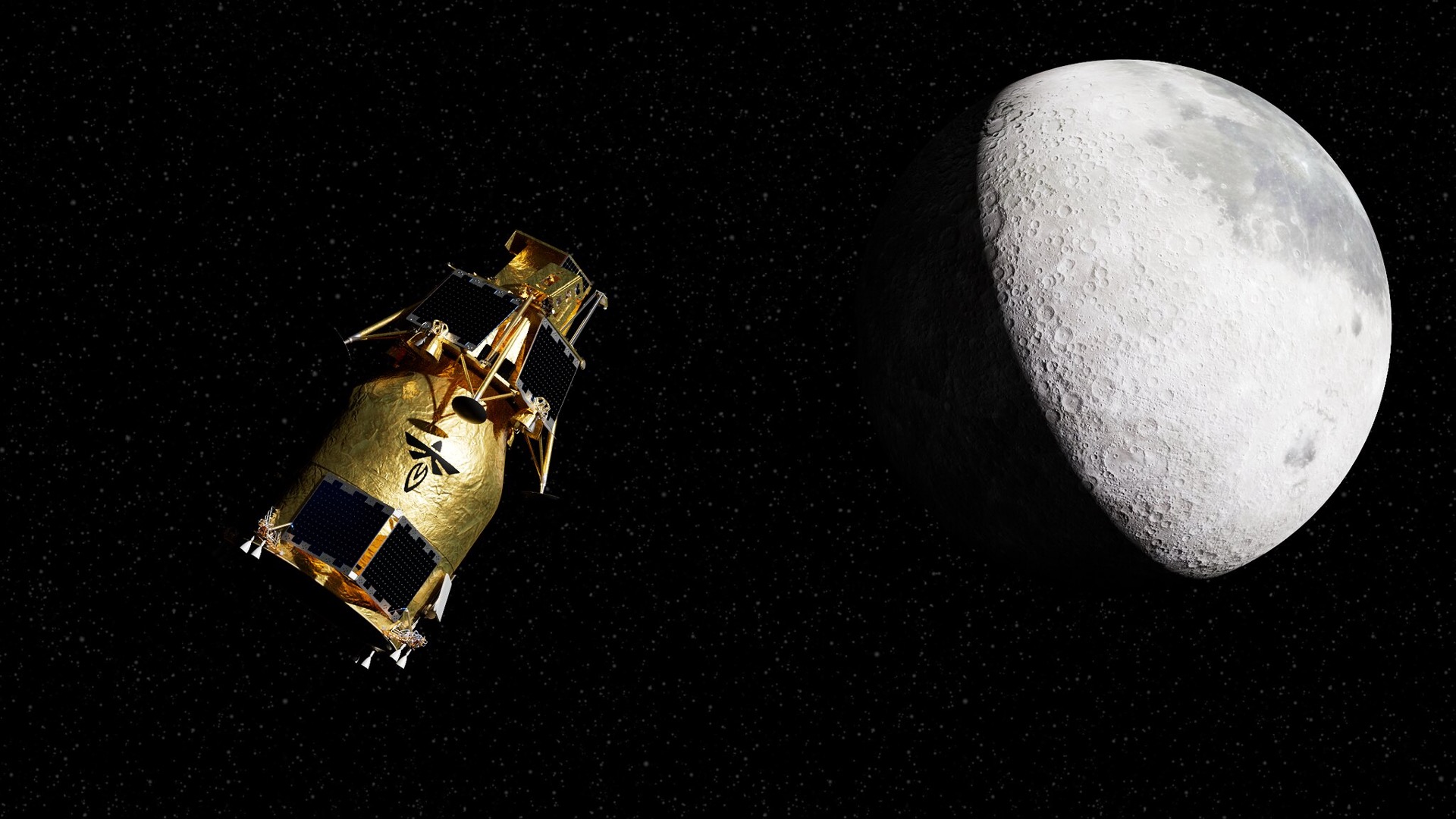
Space company Firefly Aerospace is set to operate the edge AI computing platform NVIDIA Jetson in lunar orbit for the first time[1]. On Blue Ghost Mission 2, targeted for launch in late 2026, Firefly's Ocula moon imaging service will use Jetson to run AI processing directly aboard the spacecraft. Rather than sending huge volumes of imagery back to Earth for analysis, the system selects only the information that matters and delivers it in near real time.
NVIDIA Jetson Operating in Lunar Orbit for the First Time
In March 2025, Firefly Aerospace successfully landed on the moon with its Blue Ghost Mission 1 lander and downlinked roughly 120 gigabytes of raw data captured by onboard cameras — imagery that scientists are still processing today[1].
The follow-on Blue Ghost Mission 2 is targeted for launch in late 2026, and this is where Ocula goes into full operation. It marks the first time NVIDIA Jetson has run in lunar orbit[1]. Jetson is a power-efficient computing module for edge AI — the kind of on-site inference embedded in robots and industrial equipment — and its strength is running AI in the field without relying on a data center.
On this mission, a lunar lander will separate from the main vehicle and descend to the far side of the moon, carrying instruments including a radio telescope. This is part of NASA-funded, UC Berkeley-led research aiming to detect faint signals from the cosmic Dark Ages shortly after the Big Bang[1]. Meanwhile, Firefly's Elytra spacecraft will continue orbiting the moon for about five years, handling the Ocula and Jetson processing chain[1].
How Ocula Changes Data Processing in Space
Until now, space-based sensing has followed a slow pipeline: sensors gather data, transmit it over constrained and latent radio bandwidth, and ground-based CPUs take days or weeks to extract useful insights[1].
Ocula dramatically compresses that timeline. It runs Jetson inference directly in lunar orbit, rapidly processing imagery captured across ultraviolet and visible spectrum bands aboard Elytra and autonomously transmitting only the needed information back to Earth[1]. In space, Jetson is powered by solar panels and works in combination with AI software developed by Firefly's SciTec subsidiary. The optical payloads were developed jointly with Lawrence Livermore National Laboratory[2].
"We believe in a future where all AI processing and sensing will happen in space," said Jason Kim, CEO of Firefly Aerospace. He compared the vision to the transatlantic cables that connect continents to enable the internet, saying the company wants to link orbital constellations to enable something greater than any single constellation could achieve[1].
From Lunar Mapping to Resource Detection
Ocula is built for a wide range of uses. With high-resolution imagery, it can map fine-grained lunar surface details to chart landing sites for future human and robotic missions. It can also detect distinctive mineral compositions such as ilmenite, which could prove vital for future energy applications[1].
As more nations and companies seek to establish a presence on the lunar surface, Ocula can provide situational awareness of infrastructure, vehicles and operations on the moon. In the cislunar domain — the vast region between Earth and the moon — it can track objects and monitor space activity[1]. Customers include NASA and the U.S. Space Force, as well as space, mining and energy companies looking to draw power and resources from the moon[1].
What Comes Next
Firefly plans to fly Ocula sensors on subsequent Blue Ghost missions, refining the technology with each launch and adopting newer platforms such as the NVIDIA Space-1 Vera Rubin Module as they become available[1]. The company is also on contract to deploy two more Elytra vehicles to lunar orbit on the third and fourth missions following Blue Ghost Mission 2, increasing revisit frequency to strengthen lunar mapping, resource detection and space domain awareness[2].
NASA is planning approximately 30 robotic lander missions in the coming years, so opportunities to advance on-orbit AI are accelerating[1]. "The way to predict the future is to manifest it," Kim said, stressing that the company is making that future happen right now[1].
Summary
NVIDIA Jetson operating in lunar orbit for the first time signals that data processing in space is beginning to shift from "send it to Earth and analyze" to "analyze on site and send only the conclusions." The spread of edge AI beyond terrestrial robots and industrial equipment into the extreme environment of lunar orbit is a development worth watching as we consider where space business and AI are headed.
Source:https://blogs.nvidia.com/blog/firefly-aerospace-nvidia-jetson-lunar-orbit/