
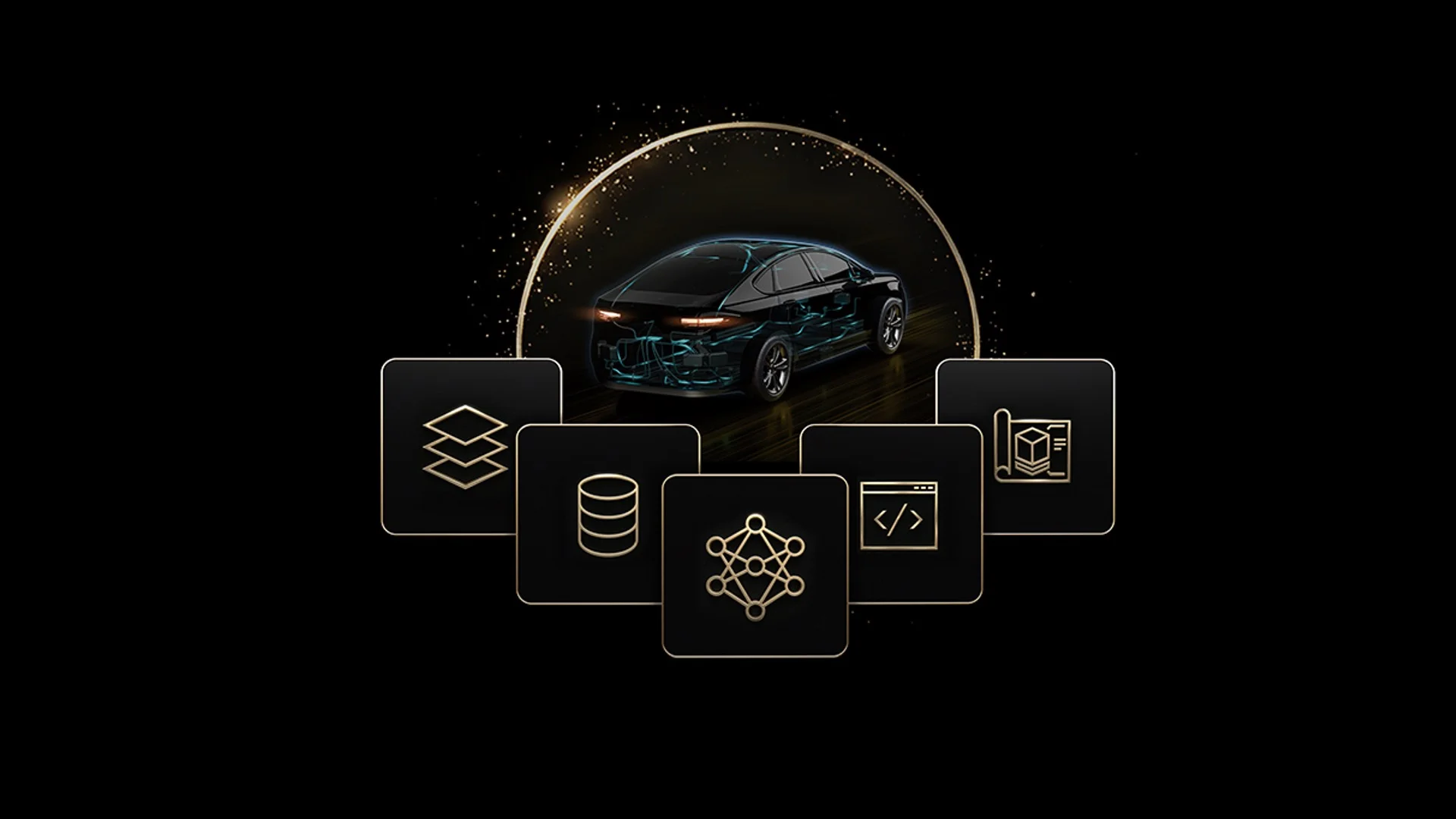
On August 4, NVIDIA released NVIDIA Alpamayo 2 Super, a reasoning model for autonomous driving, in a form that can be used commercially. The model has 34 billion parameters and its weights are hosted on Hugging Face. The key point is the license: OpenMDW-1.1, the Linux Foundation's permissive license, which allows fine-tuning and redistribution of derivative models without additional permission[1].
From R&D Use to Production Deployment
Alpamayo 2 Super was first announced on May 31 at NVIDIA GTC in Taipei[2]. At the time, NVIDIA said inference code would arrive on GitHub and model weights on Hugging Face over the summer. That release has now happened, and the licensing terms have been clarified alongside it.
Earlier Alpamayo models were offered for research and development. OpenMDW-1.1 now applies across the entire Alpamayo family, so any model in it can be deployed commercially without requesting further permission[1]. Fine-tuning, derivative models and commercial redistribution all fall within the license, and distilled models can be deployed commercially without further permission from NVIDIA. The model's outputs themselves carry no license conditions[3].
This matters for automakers and suppliers. They can adapt the model to their own driving data and driving policies, keep the resulting know-how in house, and still ship it in a product. There is no need to retrain foundation capabilities from scratch, and no need to keep paying frontier-model costs for every task.
A Two-Stage Design: 32 Billion Plus 2 Billion, With Up to Seven Cameras
Alpamayo 2 Super combines the 32-billion-parameter NVIDIA Cosmos 3 Super Reasoner with a 2-billion-parameter diffusion-based Action Expert, for 34 billion parameters in total, and is post-trained with reinforcement learning[3].
The division of labor is clear. The Reasoner interprets multi-camera video, language context and the vehicle's prior motion history, and the Action Expert converts the resulting internal representation into a future trajectory for the ego vehicle.
Perception now spans 360 degrees across up to seven cameras, expanding from the front-focused coverage of earlier generations[3]. Side and rear context matters most in exactly the situations where risk tends to arise: lane changes, merges, unprotected turns and complex intersections.
In terms of scale, the model is 3 times larger than the previous 10-billion-parameter Alpamayo 1 and Alpamayo 1.5[1]. NVIDIA says the added capacity helps the model generalize from sparse examples. The hard part of autonomous driving is not the everyday scene but the rare, multi-agent interaction, so the increase is aimed squarely at that.
Five Outputs From a Single Input
For each driving situation, Alpamayo 2 Super can produce the following 5 outputs at once[1].
- A trajectory describing the vehicle's planned path
- A Chain-of-Causation (CoC) trace that explains the reasoning behind the decision
- A meta-action such as yield, lane change or stop, capturing higher-level intent
- Reasoning auto-labels that generate CoC annotations for training and validation data
- Visual question answering (VQA) with 2D grounding, linking answers to specific regions in camera images
The trajectory is what the vehicle will do; the CoC trace is why. Having both lets developers trace what the model observed and what it then chose. Separating the outputs this way also makes it easier to determine whether a failure originated in perception, in reasoning or in action generation.
Use as an auto-labeler is also part of the design. Running CoC labeling and 2D-grounded VQA over large volumes of clips collected by a company's own fleet turns raw footage into training data. NVIDIA says this compresses annotation cycles from months to days[1][3].
Where It Stands on Benchmarks
Lining up the figures NVIDIA published shows both the gain over the previous Alpamayo 1.5 Nano and the gap against general-purpose large models[3].
| Evaluation | Metric | Alpamayo 2 Super | Reference scores |
|---|---|---|---|
| LingoQA | Lingo-Judge score | 79.2 | Alpamayo 1.5 Nano 74.2 / Qwen3-VL 32B 72.2 / Qwen2.5-VL 72B 62.2 / Gemini 2.5 Pro 64.1 / GPT-4o 56.0 |
| Trajectory prediction | minADE_6 (6.4 s) | 0.911 m | Alpamayo 1.5 Nano 0.916 m |
| AV reasoning | Reasoning score | 0.433 | Alpamayo 1.5 Nano 0.414 / GPT-5.5 0.502 |
| Closed-loop | AlpaSim score | 1.50 ± 0.13 | Alpamayo 1.5 Nano 1.37 ± 0.10 |
On LingoQA, which measures reasoning for driving, the model ranks first among the 37 models evaluated[3]. It leads Qwen2.5-VL 72B by 17.0 points, Gemini 2.5 Pro by 15.1 points and GPT-4o by 23.2 points. Beating models with more than twice the parameter count shows what a purpose-built model can do.
On the AV reasoning benchmark, however, it does not reach GPT-5.5's 0.502. A domain-specific foundation model does not top the latest general-purpose models on every metric.
Elsewhere, meta-action evaluation on 94,000 clips yields IoU figures of 74.59 lateral, 61.91 longitudinal and 73.55 lane-wise[3]. VQA answer similarity is 0.652, ahead of Qwen3-VL 32B at 0.450. For 2D grounding, IoU reaches 0.71 against 0.17 for the same comparison model.
Reasoning in the Cloud, Distilled Models in the Car
A 34-billion-parameter model does not go into the vehicle as is. What NVIDIA describes is a workflow where the large model generates reasoning traces and synthetic training data in the cloud, that output teaches a smaller model through distillation, and a lighter model runs in the car on NVIDIA DRIVE AGX Thor[1][2]. Within the family, Alpamayo 1.5 and Alpamayo 1 remain as more cost-efficient options for cloud-side development and distillation.
Safety validation is wired in as well. CoC traces integrate with NVIDIA Halos safety-validation workflows and support AI safety work aligned with ISO/PAS 8800 requirements[1]. A format that leaves the reasoning behind a decision in written form starts to pay off once conversations with regulators are in view.
The surrounding toolset is in place too. NVIDIA AlpaSim handles closed-loop simulation, NVIDIA AlpaGym runs high-throughput reinforcement learning, NVIDIA Physical AI Open Datasets supply training and evaluation data, and post-training recipes and an auto-labeling pipeline are published as well[1]. The Alpamayo family has now passed 500,000 downloads on Hugging Face[1].
Summary
On August 4, NVIDIA made Alpamayo 2 Super, a 34-billion-parameter reasoning model for autonomous driving, available for commercial use. The license is OpenMDW-1.1, covering fine-tuning, derivative models and commercial redistribution, and it now applies across the whole Alpamayo family. The model pairs the 32-billion-parameter Cosmos 3 Super Reasoner with a 2-billion-parameter Action Expert, perceives 360 degrees across up to 7 cameras, and returns 5 output types: trajectories, CoC traces, meta-actions, auto-labels and VQA. It ranks first among 37 models on LingoQA, but falls short of GPT-5.5 on the AV reasoning score, so the balance between domain-specific and general-purpose models still varies by metric.
References
[1] NVIDIA Alpamayo 2 Super, the Frontier Open Model for Robotaxis and Autonomous Vehicles, Now Available for Commercial Use - NVIDIA Blog
[2] NVIDIA Launches Alpamayo 2 Super Open Reasoning Model for Robotaxis - NVIDIA Newsroom
[3] Generate Trajectories, Reasoning Traces, and Auto-Labels with NVIDIA Alpamayo 2 Super - NVIDIA Technical Blog