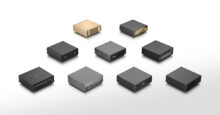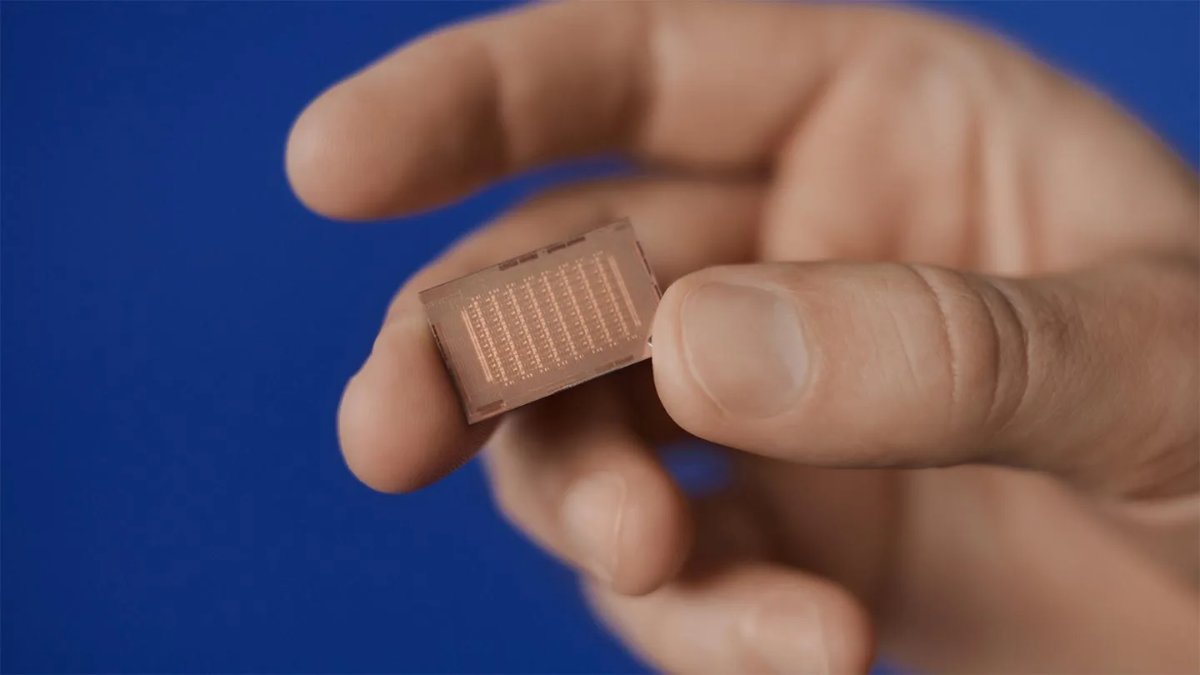
Meta is reportedly set to begin mass production of its in-house AI chip, "Iris," in September 2026. The report, based on an internal memo cited by Reuters, says the chip was co-designed with Broadcom and is manufactured by TSMC. Built specifically for generative AI inference, Iris is intended to ease Meta's dependence on expensive Nvidia GPUs while efficiently expanding the company's AI infrastructure.
A Piece of the MTIA Roadmap: "Iris"
Iris is one part of Meta's own semiconductor program, the Meta Training and Inference Accelerator (MTIA). In March 2026, the company outlined the next four generations of chips under this program, referred to at the time as the MTIA 300, 400, 450, and 500. Each has either already been deployed or is scheduled for deployment within the next 18 months, and they are used mainly to support generative AI inference, the process of running a trained model to return answers or predictions.
Rather than general-purpose GPUs, MTIA chips are custom silicon designed to match Meta's own services. The goal is to run efficiently the enormous volume of processing Meta handles every day, from recommendations across Facebook and Instagram to generative AI features. Adding Iris to this lineup lets the company handle purpose-built inference workloads at lower cost.
Designed with Broadcom, Made by TSMC
According to the internal memo, testing Iris took about six weeks and turned up no major issues. Meta says the chip was optimized to meet its internal requirements, that it worked with communications-chip leader Broadcom on the design, and that manufacturing was entrusted to TSMC, the world's largest contract chipmaker.
Behind this investment in custom silicon lies a desire to reduce reliance on Nvidia, which holds a near-monopoly position in the AI GPU market. That said, Iris is not meant to replace the large stock of Nvidia and AMD GPUs Meta already runs; rather, it complements them, taking over specific tasks such as inference. By having its own chips absorb part of the load, Meta reduces the need to keep buying costly GPUs from outside, which it expects to improve its cost structure.
A Compute Base Doubling to 14 Gigawatts
The mass production of Iris is tied to a broader buildout of computing resources. Meta plans to deploy 7 gigawatts (GW) of processing capacity in 2026 and to double that to 14 GW by the end of 2027. So far this year it has deployed 1 GW, and the internal memo indicates plans to add another 5.5 GW in the second half of 2026.
To support this expansion, Meta has been locking down its supply chain. It has reportedly signed supply agreements with SAMSUNG for memory, SanDisk for flash storage, and Sumitomo Electric for fiber-optic equipment. Capital spending is also swelling: CFO Susan Li said the company raised its 2026 full-year capital expenditure outlook to between 120 billion and 135 billion USD (about 19 to 22 trillion yen), a figure she said reflects higher component pricing and, to a lesser extent, additional data-center costs to support future capacity.※1 USD = 162 JPY
Earlier this year, Meta established a new division dedicated to expanding data-center capacity, called "Meta Compute." CEO Mark Zuckerberg has said the company plans to build tens of gigawatts this decade and hundreds of gigawatts or more over the long term. More recently, Meta has reportedly been considering launching a cloud business to sell external access to this compute and to its AI models, suggesting an ambition to turn AI infrastructure itself into a revenue source, anchored by its own chips and a vast compute base.
Summary
Meta is moving its custom AI chip Iris into mass production in September, aiming to strengthen its generative AI inference base while curbing reliance on Nvidia GPUs. Viewed alongside the plan to double compute capacity to 14 GW, the supply deals with SAMSUNG, SanDisk, and Sumitomo Electric, and capital spending approaching the equivalent of 20 trillion yen, this is about far more than a single chip. It is one example of how major tech companies are bringing everything from semiconductors to data centers in-house, building their competitiveness in the AI era from the ground up.