

Intel announced the recipients of its 2025 Outstanding Researcher Awards (ORAs), which honor university researchers[1]. This year, 10 individuals were selected for achievements across a wide range of fields, including AI, semiconductor devices, and memory safety[1]. The program recognizes the most outstanding work each year among the university research that Intel supports[1].
What Kind of Program the Outstanding Researcher Awards Are
The Outstanding Researcher Awards recognize researchers who have produced results leading to next-generation technology within the university research that Intel funds[1]. The scope is broad, ranging from foundational science to applied research aimed at real-world implementation, and the program is run by Intel's internal Corporate Research Council[1]. The council is responsible for advancing collaboration with leading universities, research centers, and ecosystem partners, and the awards are positioned as one of the initiatives that symbolize this collaborative effort[1]. Intel says it wants to advance its mission of creating world-changing technology that enriches the lives of every person on Earth through this kind of cooperation with academia[1]. Through its research arm, Intel Labs, Intel also operates joint research centers with universities and runs collaborative programs with bodies such as the U.S. National Science Foundation[2].
AI and Semiconductors at the Frontier of the Award-Winning Research
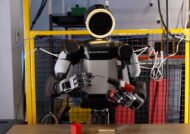
The 2025 award-winning research spans both AI and semiconductor technology. In the supply chain field, John Fowler (Arizona State University) won for research that automates the development of supply chain "digital twins" using generative AI and reinforcement learning[1]. Mohsen Imani (University of California, Irvine) was recognized for research on symbolic AI that substantially improves the efficiency of training and inference through "hyperdimensional computing," inspired by the workings of the brain[1]. Vijay Raghunathan (Purdue University) was selected for research on heterogeneous computing that combines CPUs, GPUs, and NPUs to make AI processing more efficient[1].
Research on semiconductor devices and circuits is also represented. Farzan Gity (Tyndall National Institute, Ireland) clarified the relationship between grain boundaries and electrical properties in next-generation 2D materials[1]. Visvesh Sathe (Georgia Institute of Technology) developed compact temperature sensors that precisely measure heat in 3D-stacked chips[1]. Uwe Schroeder (NaMLab, Germany) and Eilam Yalon (Technion – Israel Institute of Technology) jointly won for research on controlling ferroelectric memory materials[1]. In addition, Cristiano Giuffrida (VU Amsterdam) won for memory safety, Jiayi Huang (Hong Kong University of Science and Technology) for the efficiency of on-chip data transfer, and Shenlong Wang (University of Illinois at Urbana-Champaign) for generative AI for physics-grounded virtual environments[1].
What Collaboration with University Research Means
Behind Intel's emphasis on collaboration with academia is the fact that competition in semiconductors and AI requires a base far too broad for any single company to cover on its own. Much of the award-winning research — memory safety, thermal management, on-chip data transfer, new computing methods, and more — addresses themes that could eventually relate to Intel's products or foundational technology[1]. In fact, Intel says the heterogeneous computing and virtual environment research will help with its next-generation AI platforms and its roadmap for 3D content creation[1]. For university researchers, there are also benefits in gaining exposure to corporate problem awareness and real-world data, and it can lead to the hiring of talented students. Intel Labs continues to invest in university research, and this round of awards can be seen as part of that long-term effort[2][3].
Summary
Intel's 2025 Outstanding Researcher Awards honored 10 university researchers across fields ranging from AI to semiconductor devices[1]. Academic collaboration that bridges foundational research and real-world implementation looks set to remain an important foundation for Intel as competition in semiconductors and AI intensifies.
出典:https://www.intel.com/content/www/us/en/research/academic-collaborations.html
出典:https://www.intel.com/content/www/us/en/research/news/outstanding-researcher-awards-2024.html