On August 24, 2026, Google opened up the Gemini app's ability to generate interactive simulations and 3D models to all Google Workspace customers and Workspace Individual subscribers. The feature had shipped to consumers back in April, but Workspace and education accounts were excluded at the time. With this rollout, people can now pull up a diagram they can actually manipulate without leaving their work account.
From static diagrams to something you can poke at
Gemini's answers used to be mostly text with a static illustration attached. What is new here is that the illustration moves, and the person asking can change its values. Rotating a molecule or reproducing the behavior of a physical system now takes a single prompt.
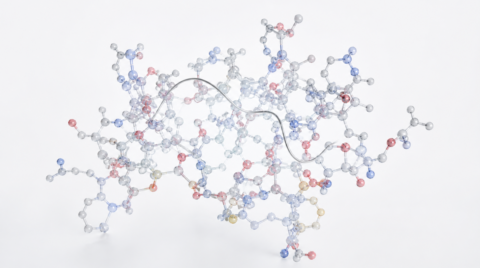
The visual elements included in a response are assembled to fit the question, whether that means a table, a grid, or a running simulation. Ask it to show you how DNA works in 3D and you get a structure you can rotate and zoom. Watching a pendulum trade energy back and forth, or working through a cash burn rate in a table you can adjust, are among the intended uses as well.
What makes this interesting is that the generated figure is something to play with rather than something to read. Ask how the moon orbits the Earth and you are not stuck staring at a fixed diagram. You can drag sliders for initial velocity and gravitational strength, or type in exact numbers, and see on the spot which conditions produce a stable orbit.
Workspace accounts were left out in April
The feature itself was announced on April 9, 2026 and rolled out to Gemini app users at the time. The announcement carried a footnote, though: education and Workspace accounts were not yet covered. For anyone using Gemini through a work or school account, it was a capability everyone was talking about that simply never appeared in their own environment.
This update removes that line. Coverage now extends to all Google Workspace customers, Workspace Individual subscribers, and users who meet minimum age requirements. It is already available on both Rapid Release and Scheduled Release domains.
What admins and users have to do
For admins, there is effectively nothing to do. The feature is on by default for organizations with Gemini enabled, and the Gemini app and its in-app tools are governed by the Generative AI settings in the Workspace Admin console. This feature falls under those existing controls, so if the Gemini app is switched off it will not appear, and if it is switched on there is nothing extra to enable.
There is no end user setting either. Ask Gemini to show you or to help you visualize a complex concept and you get a working diagram back. Usage limits do apply.
Useful for teaching and for explaining work
The fit with physics and biology is easy to picture, but Google's own examples include cash burn rates. There are plenty of moments in internal documents and client conversations where changing a variable and showing the result beats describing the numbers in prose.
Explaining a mechanism during onboarding, or sharing the math behind a proposal in real time, look like uses that will grow. Being able to touch the parameters is what makes the why click, and no number of static slides quite gets you there.
That said, how accurate a generated simulation is will vary with the subject. If you plan to reuse one in teaching material or an external document, it is worth checking the model's behavior against known values rather than taking it at face value.
Summary
Gemini's interactive simulation generation reached all Google Workspace customers and Workspace Individual subscribers on August 24, 2026. Work accounts that were excluded from the original April rollout can now use it with no extra configuration. Admins manage it through the Generative AI settings they already have, and users only need to phrase their request differently to get a moving diagram. Handing over a topic for someone to explore directly, instead of trying to cover it with text and static images, has become a realistic option.