
On September 2, Adobe began offering Adobe for Slack, which lets teams call Adobe's tools from inside Slack. More than 70 tools drawn from Firefly, Adobe Express, Photoshop, Premiere, Acrobat, InDesign, Illustrator, Stock, Lightroom and others are covered, and all a user has to do is tell Slackbot, Slack's built-in AI assistant, what they want made. It is available to Slack Business+ and Enterprise+ plans, worldwide from the same day, on desktop, web and mobile.
Not "open the tool" but "ask Slackbot"
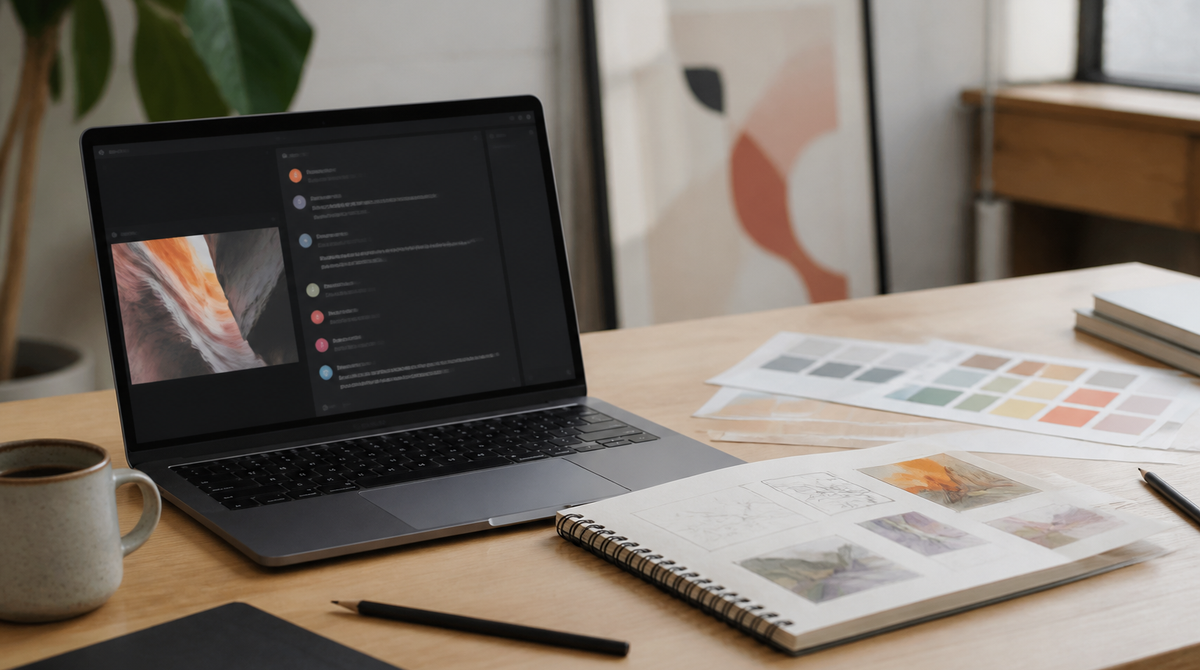
What stands out about this setup is that users never operate Photoshop or Acrobat directly. Once the Adobe app is added from Slack's app list, requests such as "remove the background from this image" or "turn this material into a PDF" are made in a conversation with Slackbot, which picks the Adobe tool that fits the job and runs it. Nobody has to decide which tool to use.
Behind this is Slackbot's new ability to connect to outside apps as an MCP (Model Context Protocol) client. Adobe packaged its tools as an MCP-compatible app, and Slackbot acts as the AI agent that routes each request to the right one. Jaime DeLanghe, Slack's Chief Product Officer, describes the Adobe app as a prime example of an MCP app in Slack.
The other key point is that information already in Slack becomes raw material. Slackbot can read channel conversations, shared files and project briefs written in Canvases as context, so a request like "make an announcement image following the direction we settled on in last week's thread" works. Adobe frames the integration around the idea that much of the context needed for the next deliverable already lives in Slack.
What it can actually do
The use cases Adobe lists lean toward everyday work such as marketing, social media operations and internal documents.
Have Slackbot summarize a conversation or Canvas, then turn that into a PDF, image or video to share with the team. Search assets stored in Creative Cloud by subject or mood, pull them in and keep editing inside Slack. Take approved images and videos and generate variations sized for each social channel in one go. Pick from thousands of templates, change the copy and colors, then animate the result for social media or output a print-ready PDF. Hand over a spreadsheet and have its contents converted into a PDF or a visual. Batch-process staff headshots or event photos with background removal, lighting and tone adjustments, cropping and resizing.
Finished work can be posted straight to a channel, where other members can follow up with "a bit brighter" or "another version." When finer control is needed, the workflow is meant to hand off to the full apps such as Adobe Express, Photoshop, Premiere, Acrobat and Firefly.
No Adobe account needed to start
Setup is simple: open a direct message with Slackbot, choose the Apps button, select Manage Apps and add Adobe. An Adobe account is not required at this stage, and you can start as a guest. Signing in with an Adobe account unlocks more tools and skills, generative AI features, access to files in Creative Cloud and continuity across sessions.
As noted above, availability is limited to teams on Slack's Business+ and Enterprise+ plans; other plans are not part of this announcement.
After ChatGPT, Claude and Copilot: the strategy of going where the chat is
Over the past few months Adobe has kept putting its tools into outside AI chat environments. In August it announced an integration that makes Adobe tools usable inside ChatGPT, and integrations for Claude and Copilot are already offered. Support for Gemini is said to be coming soon. The Slack launch is part of this strategy of bringing Adobe to wherever users already are.
Deepti Pradeep, Senior Director for Agentic AI at Adobe, says these external integrations are being used for repetitive jobs such as batch-editing images and producing resized versions of creative. Users, she says, value the time saved, reaching the result they want without micromanaging every step, and being able to use Adobe without leaving where they are working.
Canva and Figma are likewise offering their capabilities inside ChatGPT and Claude, so the race among creative tool makers to become a feature inside the chat window looks set to intensify. Adobe, for its part, points to having tools spanning images, video and documents under one roof as its advantage.
Summary
Adobe for Slack lets Slackbot run more than 70 Adobe tools, including Photoshop, Firefly and Acrobat, behind the scenes from a plain-language request, and its distinguishing feature is that conversations and Canvases become the raw material. Business+ and Enterprise+ teams can use it from launch day, and no Adobe account is needed to try it. It follows the ChatGPT, Claude and Copilot integrations, with Gemini support on the way.